
For Busy Mothers With Kids Ages 4-12
When My 8-Year-Old Started Choosing His Phone Over Family Dinner, I Knew Something Had to Change... But I Never Expected To Uncover The Horrible Risks of Too Much Screen Time
Which is Why I Created A 28-Day Screen Reset Journey That's Helped Over 2,847 Mothers Reclaim Their Children From Digital Addiction (Even If Every Other Method Has Failed)
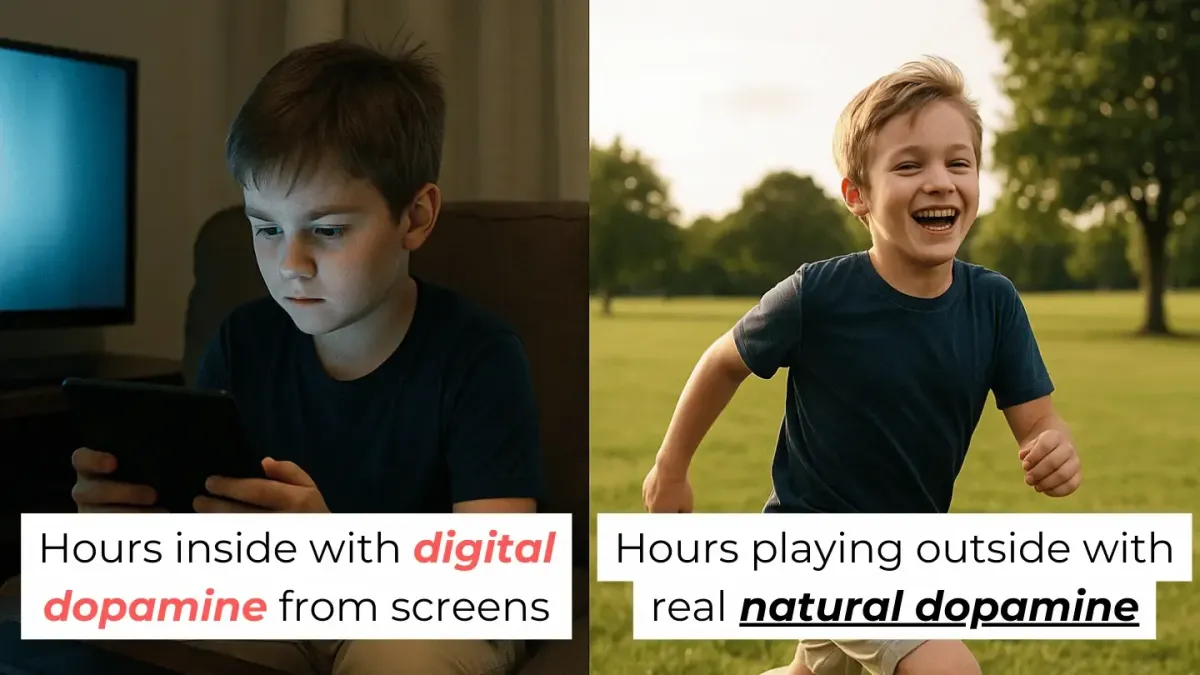
Dear super mom...
Take a breath with me for a moment...
You know that ache in your chest when your little one pushes you away, tablet clutched tight in their small hands?
When bedtime becomes a battlefield and dinner means negotiating with a tiny dictator?
I see you.
You're not failing. You're not weak.
You're a mother caught between the life you imagined and the reality of raising children in a world that's nothing like the one we grew up in.
When my son started calling his tablet 'mama,' something inside me shattered.
Not because I was angry at him...
But because I realized I'd been using that glowing screen as my co-parent when life got overwhelming.

Maybe you've felt it too...
That crushing weight when you hand over the iPad just to get through a work call, make dinner, or simply breathe for five minutes.
And then the guilt that follows...
Whispering 'what kind of mother needs a screen to help her parent?'
Here's what nobody tells you about why this feels so hard...
Those tender moments we dreamed about...
Reading stories, building blanket forts, lazy Saturday morning snuggles...
They're being gently replaced by something that feels easier in the moment but leaves us both emptier.
It's not that screens are evil.
It's that they're designed to feel more rewarding than mom's attention.
And sweetie, that's not your failure.
That's a billion-dollar industry working against your natural instincts.
🧠 Here's What Big Tech Doesn't Want You to Know

Every notification, every autoplay video, every 'just one more level'...
They're carefully crafted to pull your baby's attention away from the real world.
Away from you.
The research confirms what your heart already knows: when our little ones spend hours with screens, something shifts.
Not just in their behavior, but in how they experience joy, connection, even boredom.
But here's what matters most: it's not too late. Not even close.
Now available for instant digital download
Only A Few Days Left!
Only $47.00 $9
Save $38 today
For less than the price of a Happy Meal, you could finally hear this again:
🧡 ‘Mom, look what I built!’
Instead of:
💢 Screaming. Crying. Begging.
What’s more important than helping your child’s brain feel peace again?
Download The eBook For $47 Just $9! Delivered instantly. Start reading in the next 2 minutes.
Now Available For Instant Download
100% secure 256-bit encrypted checkout

Excellent based on +1,356 reviews


The worst part? They call it "screen time" to make it sound harmless.
But neuroscientists call it what it really is: Digital dr*gs for developing brains.
Why Every Day You Wait Makes This Harder to Fix:
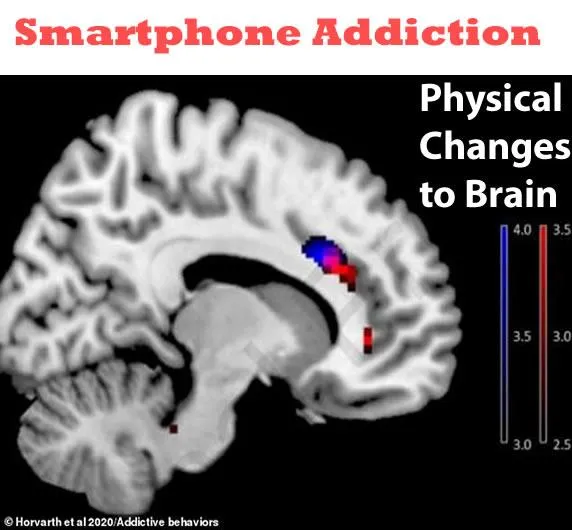
What I discovered changed everything...
You see, your child's amazing little brain is like a garden.
When screens provide constant entertainment...
It's like only watering one type of flower while the rest of the garden quietly wilts.
But gardens are resilient.
With the right care – not harsh pruning, but gentle tending – every part can bloom again.
And here's the terrifying truth:
After months and years of heavy screen use, the damage becomes PERMANENT.
MRI scans show children with 4+ hours daily screen time have:
- 20% less white matter in language centers (irreversible)
- Prefrontal cortex thinning equivalent to brain injury patients
- Dopamine receptors burned out like addicts
They lose interest in toys, struggle with transitions, and panic when the iPad disappears.
Not because they’re spoiled.
Because their nervous system is overloaded.
And that broke my heart.
Because all I wanted…
…was to enjoy bedtime again.
…to make memories off the screen.
…to see my kids play outside like we used to.
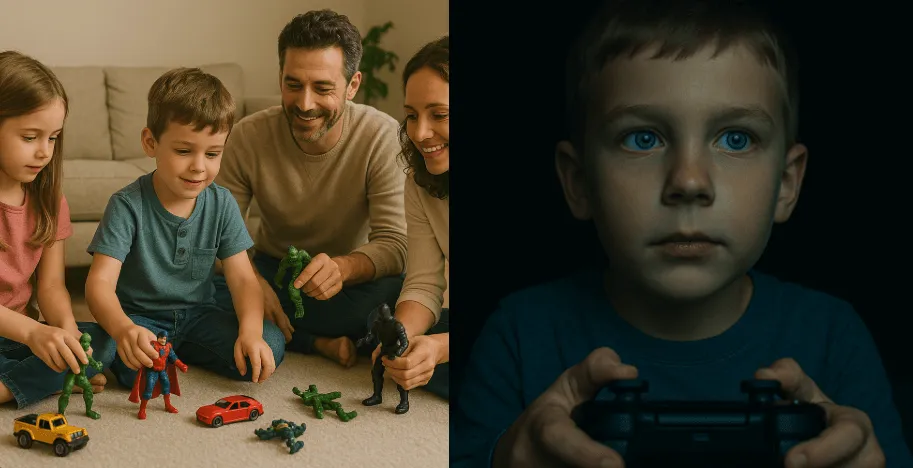
But I couldn’t just sit with that heartbreak…
I had to understand why this was happening.
So I spent nearly two years deep in the research.
Late nights after the kids were asleep…
Pediatric neuropsychology papers.
Behavioral development studies.

Parenting forums, expert interviews, and more coffee than I’d like to admit.
What I found shocked me.
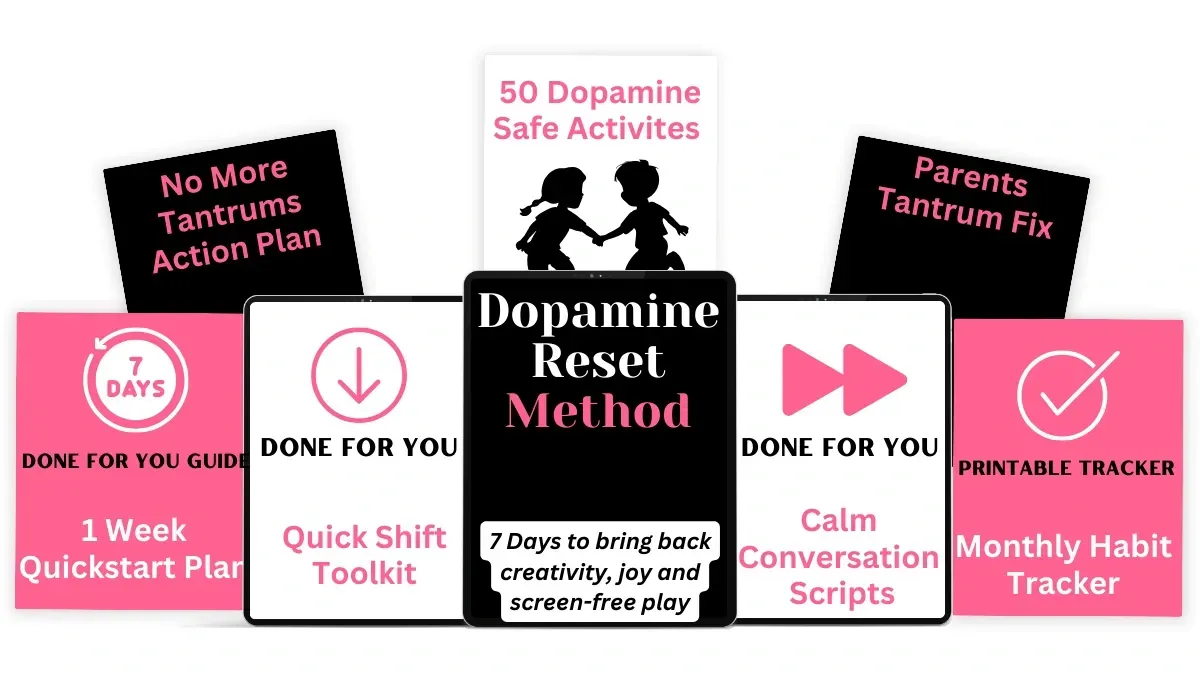
Here’s Everything Included:
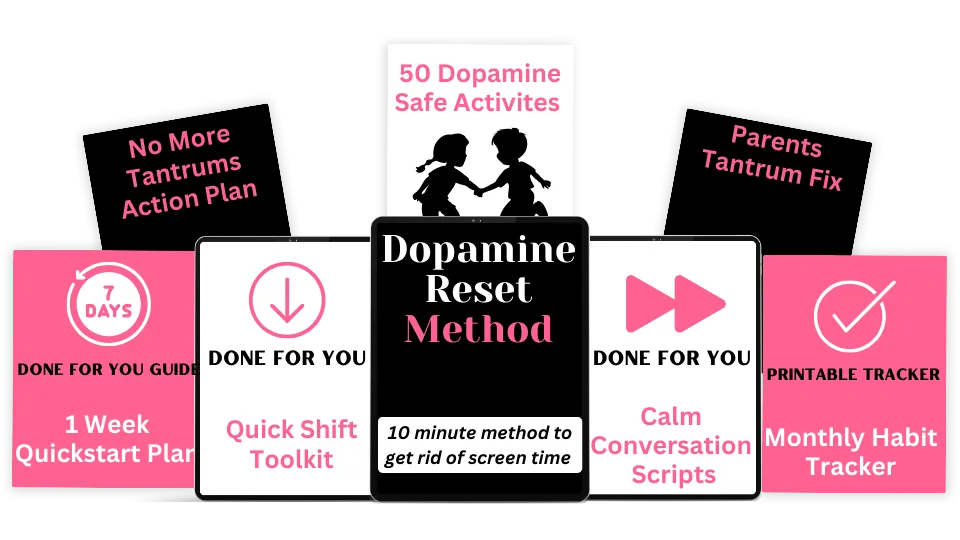
8 bonuses included today
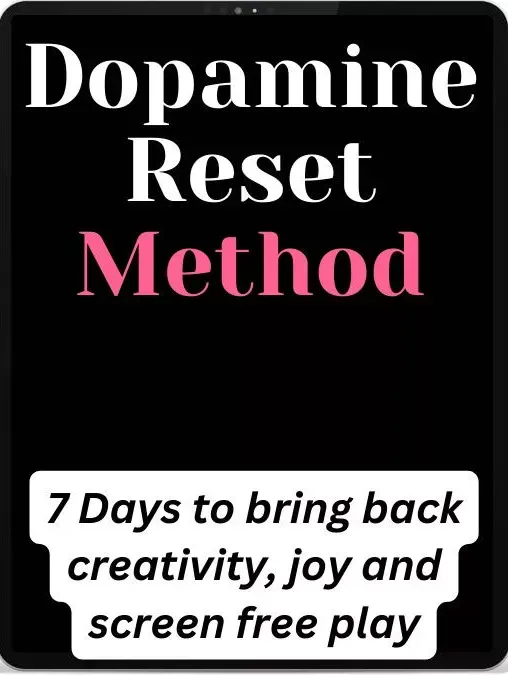
7-Day Dopamine Reset Method
This breakthrough method resets your child’s craving for digital dopamine using one 10-minute reset routine at home.
INSTANT ACCESS | Price: $57 $9.00

50 Dopamine Safe Activities
Discover 50 screen-free activities that actually work to reset dopamine levels even for kids who say “I’m bored!”.
INSTANT ACCESS | Price: $37 FREE

Parents Tantrum Fix
This “in-case-of-emergency” guide helps you regulate when you're on the edge... Created especially for parents.
INSTANT ACCESS | Price: $19 FREE

1 Week Quick-start Plan
This 7-day plan shows you exactly what to do, say, and offer each day to begin detoxing screen cravings.
INSTANT ACCESS | Price: $29 FREE
Quick Shift Toolkit
Meltdown brewing? This 3-part emergency kit gives you instant reset rituals to calm chaos in under 5 minutes.
INSTANT ACCESS | Price: $37 FREE

Monthly Habit Tracker
Use it to make new routines stick even when life gets chaotic... Made for parents and for kids!
INSTANT ACCESS | Price: $12 FREE
Calm Conversations
Use this tested word-for-word script to shift power struggles into calm cooperation, even with strong-willed kids.
INSTANT ACCESS | Price: $23 FREE

No More Tantrums
A step-by-step tantrum response framework to stay in control, avoid escalation, and train calm reactions that last.
INSTANT ACCESS | Price: $33 FREE
Only A Few Days Left
Only $47.00 $9
Save $38.00 today
Download The eBook For $47 Just $9! Delivered instantly. Start reading in the next 2 minutes.
Now Available For Instant Download
100% secure 256-bit encrypted checkout
Excellent based on +1,124 reviews
It wasn’t just screen time… it was what screens were doing to their dopamine systems.
That constant stimulation was reshaping how their little brains processed joy, frustration, even boredom.
But here’s what frustrated me most:
Every solution I found was either too extreme (“go screen-free forever!”)
Or too soft (“just let them figure it out on their own”).
There was nothing in-between.
Nothing that honored the science and the season of life we’re in as moms.
So I decided: if it didn’t exist, I’d create it.
Out of everything I read, tested, and tried in my own home…
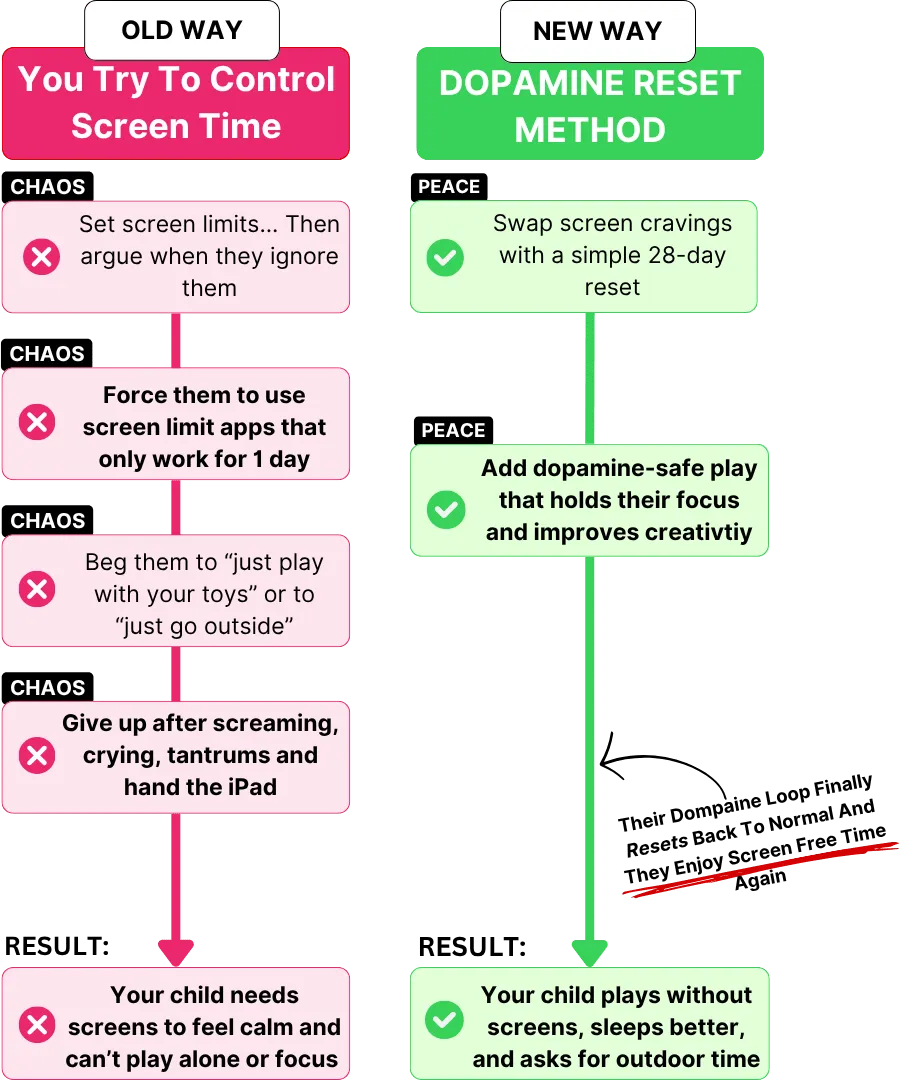
I built a gentle, rhythm-based method that helps children regulate themselves without needing you to police every moment.
It's not about ripping away their comfort (that would be cruel to both of you).
It's about gently planting new seeds of joy that grow stronger than the pull of any screen.
Think of it like this:
Right now, your child's brain has a superhighway to screen pleasure and tiny, overgrown paths to everything else.
This method simply helps those smaller paths become beautiful trails they actually want to explore
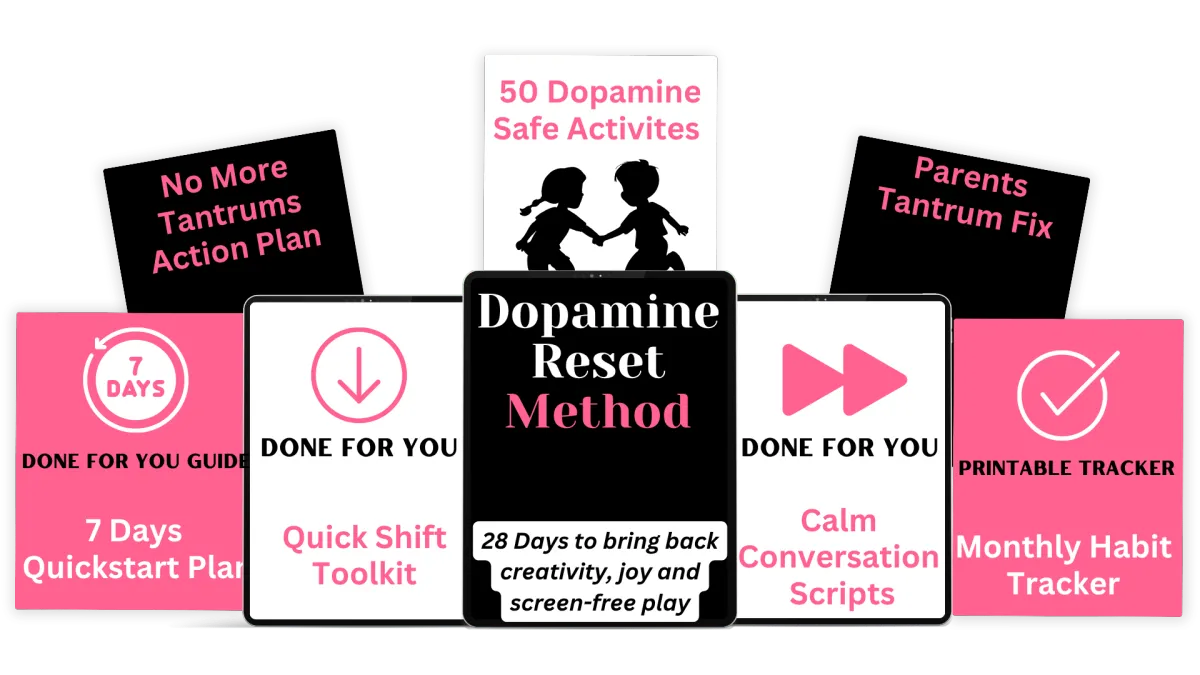
So I created the 28-Day Dopamine Reset Method…
💛 Connection without control - A way to feel close to your child again, without always feeling like the “bad guy”
🌿 Play without punishment - A chance for your kids to rediscover imagination—not because they’re told to, but because they want to
🕊️ Rhythm without guilt - A simple structure that fits into your real life, even if your days don’t always go to plan
🔁 Change without pressure - Tiny shifts that build on each other—without cold turkey rules, timers, or power struggles
🌞 Peace that lasts beyond the 28 days - A way to finally stop “managing” screen time… and start enjoying each other again
A gentle, brain-based rhythm to help my kids rediscover joy outside the screen, without needing to take it away entirely.
It’s just a few minutes a day.
No yelling. No power struggles. No cold turkey.
And by the end of the week?
My kids were making pillow forts.
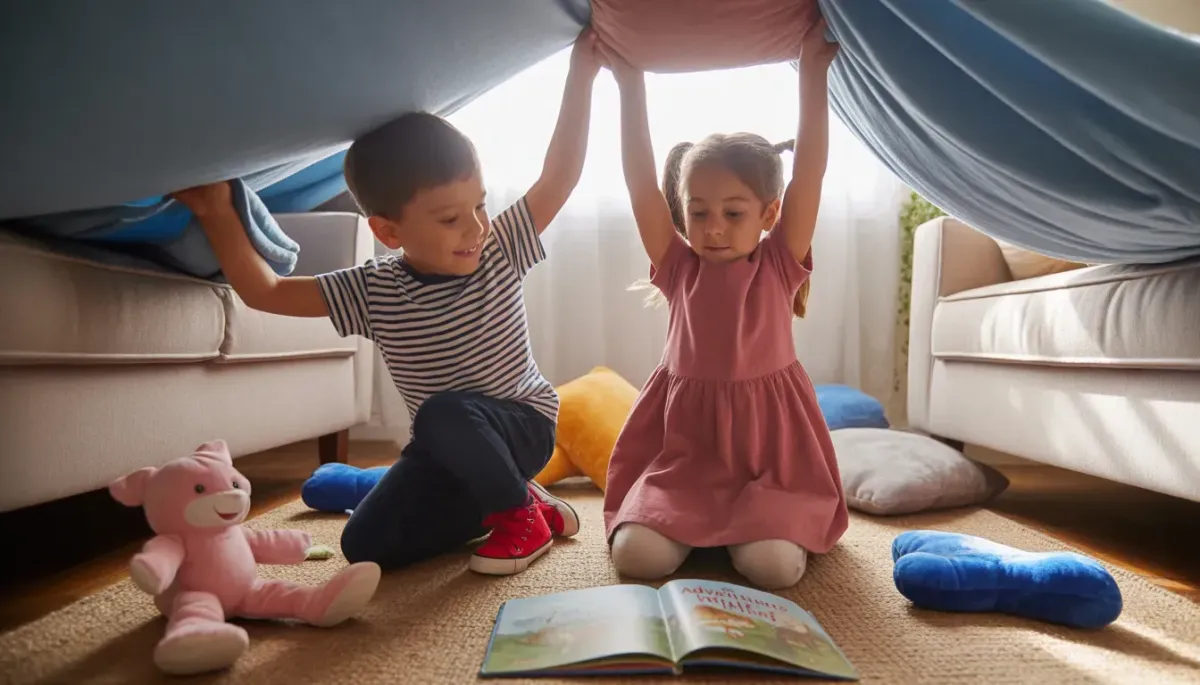
Asking to play tag.
And sitting at dinner without reaching for a screen.
It didn’t just bring peace back into our home…
…it brought me back.
It wasn’t perfect at first.
Some days felt messy.
Others felt like maybe—just maybe—we were turning a corner.
But with each tiny shift, I saw more of them come back.
The sparkle in their eyes when they built something out of nothing.
The belly laughs during a kitchen dance party.
The quiet hum of focus as they played without needing me to entertain them.

And the more I let go of pressure, the schedules, the guilt, the all-or-nothing thinking…
…the more they found their way back to what kids were always meant to do:
🌱 Explore
🎨 Create
🏃♂️ Move
💬 Imagine
It didn’t happen through punishment or restriction.
It happened through rhythm.
Through rewiring... not forcing.
That’s what the 28-Day Dopamine Reset Method is:
A simple, science-backed way to gently shift your child’s brain back into balance—without removing screens altogether.
So here's how it works:
Now available for instant digital download
BACK TO SCHOOL DISCOUNT EXPIRES SOON!
$47.00
Only $9
Save $38 today
For less than the price of a Happy Meal, you could finally hear this again:
🧡 ‘Mom, look what I built!’
Instead of:
💢 Screaming. Crying. Begging.
What’s more important than helping your child’s brain feel peace again?
Download It Now For $47 Just $9! Delivered instantly. Start reading in the next 2 minutes.
100% secure 256-bit encrypted checkout
Excellent based on 2,356 reviews
I'm Practically Giving This Away Because Every Day Your Child's Brain Deteriorates Further
Normal price: $47
Back to school price today: Just $9
Why so cheap?
Because I'd rather 1,000 children get saved at $9 than 100 children at $47.
But this emergency pricing ends in a few days...
After that, it goes to full price.
But what happens when your child starts to rediscover joy… without needing a screen to feel good?
It doesn’t take hours of discipline.
Or endless routines.
Just a few moments each day, gently layered in… and everything starts to change.
Here’s how that transformation often unfolds:
📅 Day 1 – Curiosity Wakes Up
Today, you’ll set up your child’s first “dopamineWe-safe zone.”
It’s designed to mimic the sensory draw of a screen... but in a way that feels grounded, hands-on, and playful.
Many kids begin exploring on their own within the first hour.

“That night, she didn’t ask for the iPad. She just… played.”
And once their curiosity is engaged, you’ll be surprised how quickly their imagination follows.
📅 Day 2 – Calm Becomes Contagious
Now we gently introduce reset rituals that help your child regulate without needing a screen.
Transitions feel smoother. Emotional energy softens.
You may even notice yourself relaxing a little more, too.

“Bedtime was peaceful. She actually looked forward to our routine.”
That sense of calm becomes the soil where independence begins to grow.
📅 Day 3 – Independent Play Appears
This is the day many parents see it:
Their child choosing to play… all on their own.
It’s subtle at first, but beautiful.
We call it Play Momentum™—and it only grows from here.

“He built a whole world out of LEGOs while I cooked. No asking. No whining. Just play.”
Now that their attention is re-rooting, we start supporting it during those everyday “tricky moments.”
📅 Day 4 – Together Feels Easier
Imagination deepens. Focus stretches.
And those little moments of reactivity?
They fade into more connection, more laughter, more being in the moment together.

“We ate dinner together without screens... and even had a real conversation.”
With that bond re-strengthening, it’s time to make play feel safe even during those unpredictable windows.
📅 Day 5 – Calm in the Chaos
Now we introduce Neuro-Flex Zones—soft play triggers you can activate anytime (car rides, rainy mornings, pre-dinner wildness).
Instead of reaching for a screen… they reach inward.
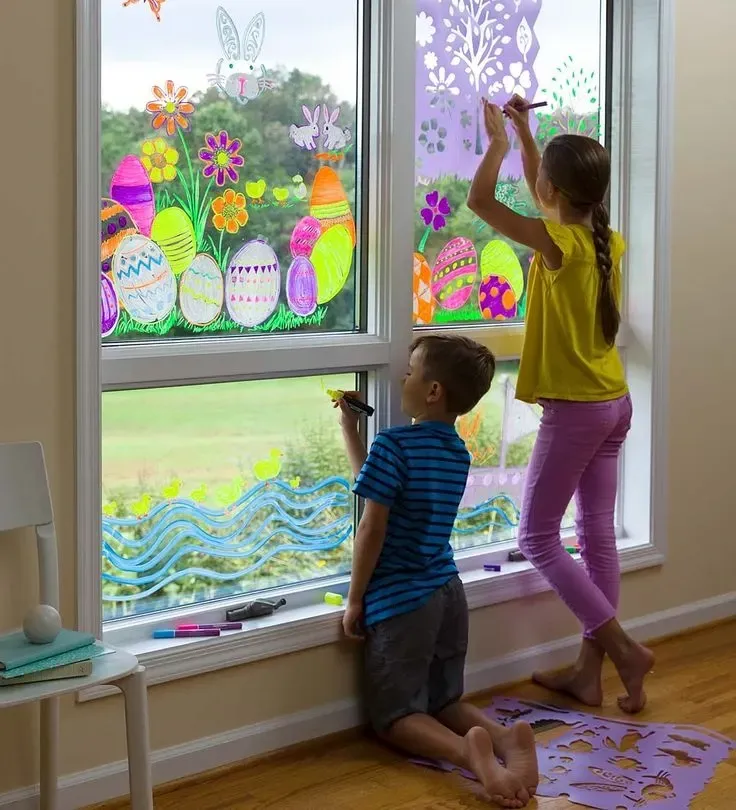
“She used to panic during long car rides. Now she colors and sings.”
And the more empowered they feel, the less they look for stimulation outside of themselves.
📅 Day 6 – Screens Take a Backseat
The shift is real now.
Screens aren’t forbidden, they’re just… less interesting.
Because now your child has another way to feel good, explore, and reset.

“He didn’t even mention YouTube today. He spent the whole morning creating a treasure map.”
With less reliance on screens, something more meaningful begins to return…
📅 Day 7 And Beyond – Joy Comes Back Home
The tantrums are down.
The requests are gentler.
And in their place?
Curiosity. Cuddles. Connection.
Not just with your child... but with yourself.

“It feels like we found our rhythm again. Like we’re really here together now.”
It’s not about control. It’s about connection.
The 28-Day Dopamine Reset Method is a calm, science-based rhythm that gives your child back their joy… and gives you back your peace.
Just a few minutes each day.
No extremes. No pressure.
Just one week to feel like a family again.
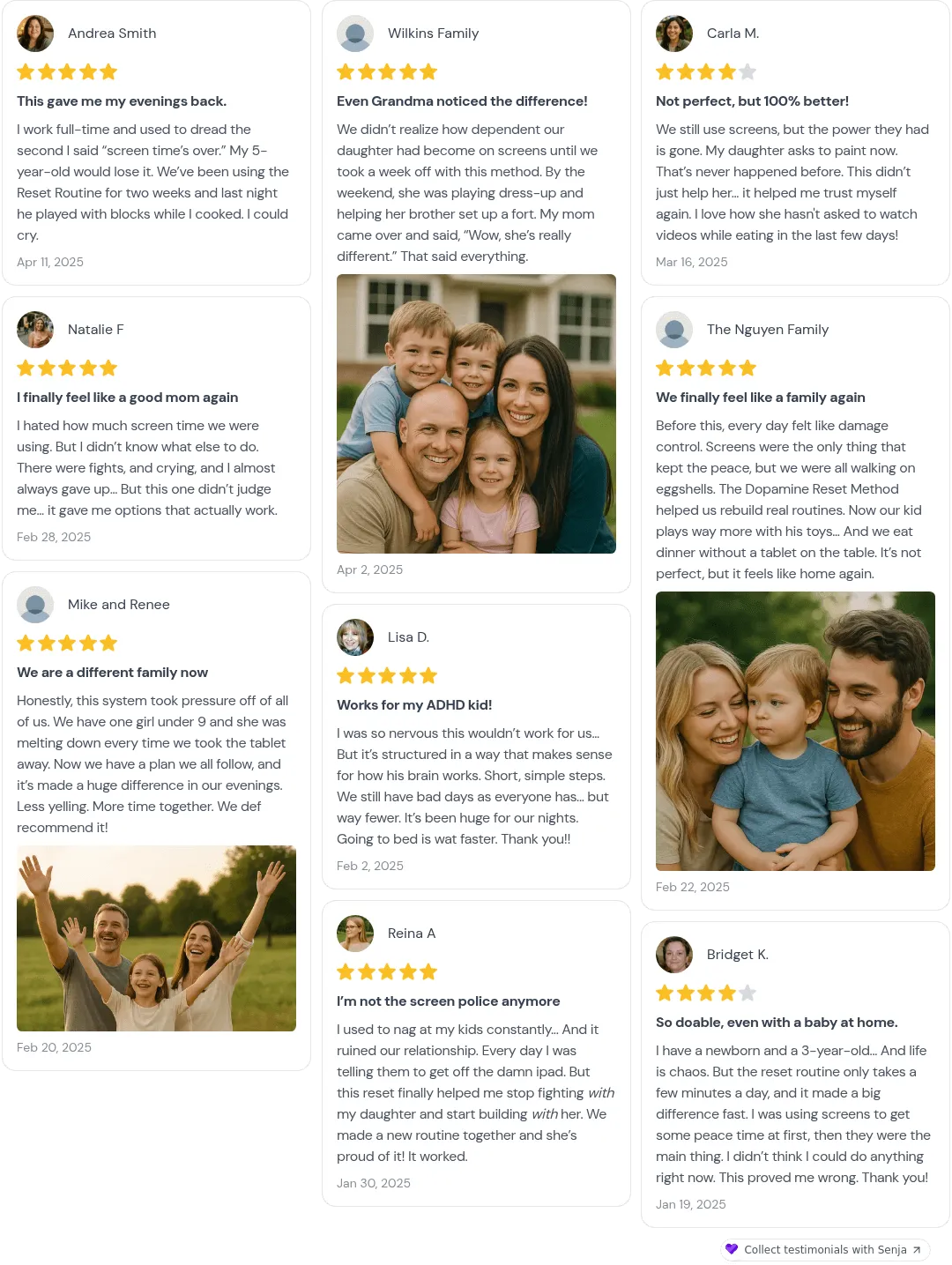
Here’s a Few of Our Case Studies Using the 28 Day Dopamine Reset Method...


Back to School Special - Download The Digital Version For Only $9
The Last System You’ll Ever Need To Break Free From Screen Addiction
This has finally allowed thousands of families to stop screen addiction without using annoying apps, going cold turkey or having daily tantrums.
Backed By Our Unconditional 30 Day Money Back Guarantee
Excellent based on +2,124 reviews
What Are Others Saying About Dopamine Reset?
"It's Much Better Than Using Random Apps or Forcing Them And Fighting"
Here's Everything You're Getting For Only $9 Today
Built by a real mom. Tested by 1,300+ families.
Dopamine Reset Method
(Digital PDF Download)
What if there was a way to cut screen time without the tears, fights, or guilt trips in just 28 days? This breakthrough method resets your child’s craving for digital dopamine using one simple, science-backed shift any parent can implement today.
INSTANT ACCESS | Price: $57 FREE
50 Dopamine Safe Activities
(Digital PDF Download)
What if you had 50 screen-free activities that actually work even for kids who say “I’m bored!”? Resets your child’s dopamine receptors and rebuilds attention, creativity, and self-regulation. Perfect for kids of all ages.
INSTANT ACCESS | Price: $37 FREE

No More Tantrums
(Digital PDF Download)
This step-by-step tantrum response framework shows you exactly what to do when your child explodes. Use it to stay in control, avoid escalation, and train calm reactions that last.
INSTANT ACCESS | Price: $33 FREE

First Day Quick-start Plan
(Digital PDF Download)
Don’t know where to start? This daily plan shows you exactly what to do, say, and offer each day to begin detoxing screen cravings without triggering nuclear tantrums.
INSTANT ACCESS | Price: $29 FREE
Quick Shift Toolkit
(Digital PDF Download)
This 3-part emergency kit gives you instant reset rituals to calm chaos in under 5 minutes so you can go from “screen fight” to “smiling kid” before the tantrum explodes.
INSTANT ACCESS | Price: $37 FREE

Calm Conversations
(Digital PDF Download)
Struggling with a defiant “No!” when you try to set limits? Use this tested word-for-word script to shift power struggles into calm cooperation even with strong-willed kids who hate hearing "no more screen time."
INSTANT ACCESS | Price: $23 FREE
Monthly Habit Tracker
(Digital PDF Download)
Turn screen resets into lasting change with this dopamine habit tracker designed for young kids and overwhelmed parents. Use it to make new routines stick even when life gets chaotic.
INSTANT ACCESS | Price: $12 FREE
Parents Tantrum Fix
(Digital PDF Download)
Your kid’s not the only one who loses it. This “in-case-of-emergency” guide helps you regulate when you're on the edge because staying calm during screen battles is 90% of the win. Created especially for parents.
INSTANT ACCESS | Price: $19 FREE
Backed By Our Unconditional 30 Day Money Back Guarantee

“I created this out of desperation... Not brilliance. I was a burned-out mom of three, stuck in the same screen fights every day. This method didn’t just help my kids play again… it gave me my evenings back, and my confidence as a mother. I didn’t think it was possible anymore. It truly changed our family from the inside out.”
- Debbie J, Author of Dopamine Reset Method

Your Purchase Is Backed By Our Unconditional Money Back Guarantee
I know that before I get into anything…
You probably want to know exactly what you’re getting and that it’s backed by a guarantee you can actually trust.
And I want you to feel completely comfortable making this decision for your family.
Even though it’s just $9... you worked hard for that money, and every dollar matters when you're raising kids.
Like my mom used to say: “Don’t commit to the babysitter until you’ve seen how they handle a tantrum.”
So here’s what I’ve arranged:
Download The Dopamine Reset Method, read it... but more importantly, try the 28-day screen reset challenge.
And if you’re not genuinely blown away by how it starts to shift the screen fights, tantrums, and stress in your home…
Then just send us an email at [email protected] within 30 days and we’ll give you a full refund.
No questions. No hassle. And you’ll still get to keep the entire Dopamine Reset Method as our thank-you for giving it a shot.
How’s that for a guarantee? I’d say pretty fair. Especially if it helps you get your kid back.
WARNING: What Happens If You Do Nothing
Every day you wait, your child's brain becomes more dependent on artificial stimulation.
By age 12, screen-addicted children show the same neural patterns as addicts...
And the children who don't get help become adults whith higher risks of not forming relationships, hold jobs, or feel joy without a screen.
Don't let your child become another casualty of Big Tech's war on childhood.
The window to save them is closing.
Frequently Asked Questions
Need help? email us at [email protected]
What age is this best for?
The Dopamine Reset Method is designed for kids between 2 and 12 years old. That’s the age range where screen habits form fast and where routines can still be shifted with gentle, play-based strategies.
Will this still work if my child watches 5+ hours a day?
Yes. In fact, that’s exactly who this was made for. The system doesn’t rely on cutting screens cold turkey it rewires screen cravings gradually through structured replacement routines that meet your child’s need for stimulation.
What if my child has ADHD, sensory challenges, or behavioral delays?
Many parents using the Dopamine Reset Method have children with ADHD, ASD, or sensory sensitivities. The routines are flexible, calming, and grounded in child psychology not punishment or discipline. Always consult your provider, but this is often a helpful complement to therapy.
How fast will I see results?
Some parents report noticeable shifts in as little as 3 days. Others take 1–2 weeks as they find their rhythm. The key is consistency, most families feel a real difference in 21 days or less.
Is this a physical book?
Nope, it’s a digital download. You’ll get instant access to the ebook, printable routine templates, and all the bonuses immediately after purchase. No waiting, no shipping.
Do I need to be super strict or tech-free for this to work?
Not at all. This method doesn’t require bans, rules, or rigid schedules. You don’t even have to reduce screen time at first. The focus is on building routines that gently shift behavior without shame or power struggles.
What if it doesn’t work for my family?
Try it risk-free. If you don’t notice any progress within 30 days, just email us for a full refund. No hard feelings. We want you to feel supported — not stuck.
Only $47 $9 Today
Download The eBook For $47 Just $9! Delivered instantly. Start reading in the next 2 minutes.
This product is brought to you and copyrighted by TinyFamSpark.